Premonitions / Waking Visions
Explore →Future-oriented perceptions, visions, or clairvoyant experiences.
Other
Explore →Experiences that do not fit established categories, including rare or anomalous phenomena.
Research Continuity
Over 25 years of data collection have shaped how near-death experiences are studied at NDERF.org.
As technology and scientific understanding evolved, the questionnaires were refined multiple times to focus on questions that produced the most relevant, reliable, and statistically meaningful data.
Today, more than 16,000 experiences are preserved across the three NDERF consciousness research websites. Most were submitted through structured questionnaires, with a smaller number shared as narrative accounts. Data from oberf.org and adcrf.org is currently being consolidated into the NDERF research framework.
Data Access Across Platforms
Experiences are being linked across systems to improve accessibility and comparison. Each account is connected to its original NDERF page, its entry in the NDERF search database, and its corresponding record on NoeticMap allowing seamless movement between platforms while maintaining data integrity.
Original submissions remain preserved for scientific study. Public-facing versions on the NDERF website are lightly edited for clarity, while the NDERF search database uses AI-assisted tools to streamline presentation. NoeticMap builds on the same underlying data and adds expanded analytical and exploratory features.
Translation & Global Research
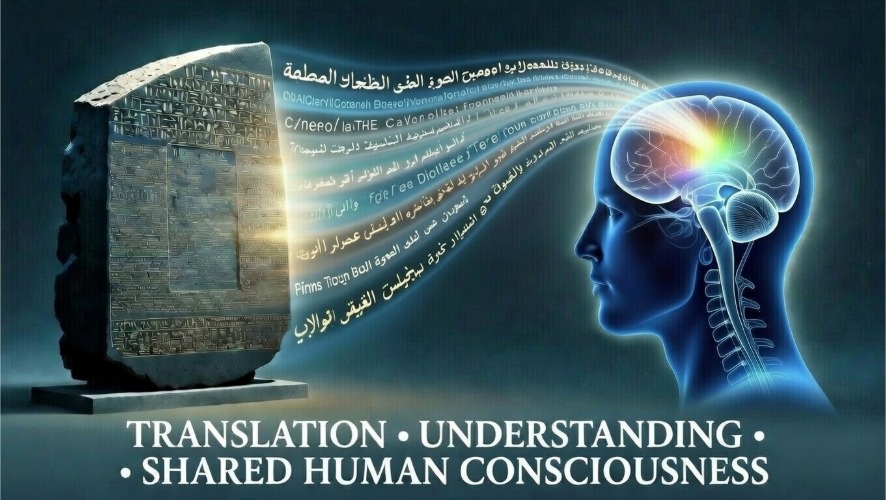
Translations are essential for cross-cultural study. English versions allow consistent classification and comparison, while original-language submissions are preserved whenever possible. The NDERF Search system can automatically translate English experiences into 17 additional languages. We have 19 languages with ongoing translations, and 2 languages with only questionnaires.
Some languages currently benefit from human translation. For example, Farsi translations produced by native-speaking volunteers remain more accurate than AI-generated versions. As translation technology continues to advance, these limitations are expected to diminish.